
Drawings to production
Manufacturing
Match your component geometry, material and finish to the appropriate production process.
Tooling to production
From drawing to inspected part
Drawing review, tooling, production and inspection are planned around each component's requirements.
Step 1
Drawings
Your drawing or sample defines the part. CAD, DWG, STEP, PDF and IGS files are accepted.
- CAD
- DWG
- STEP
- IGS
Step 2
Tooling
Stamping and moulding tooling is prepared with in-house machining equipment.
Step 3
Stamping and injection
Parts are formed on automatic presses or moulded on injection machines.
Step 4
Inspection
Finished parts pass through the inspection workshop before they are packed.
Production resources
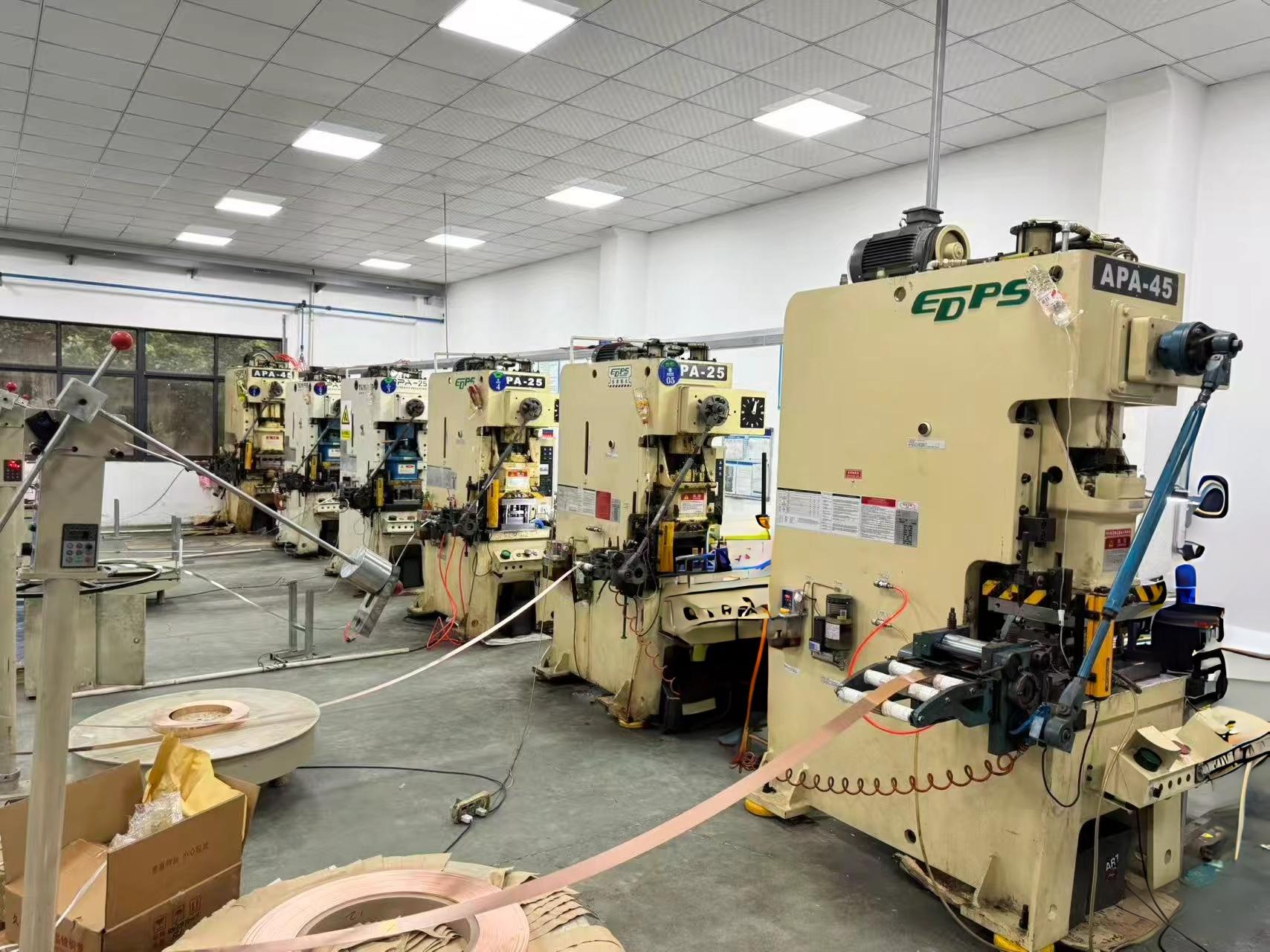
- Automatic presses
- 15
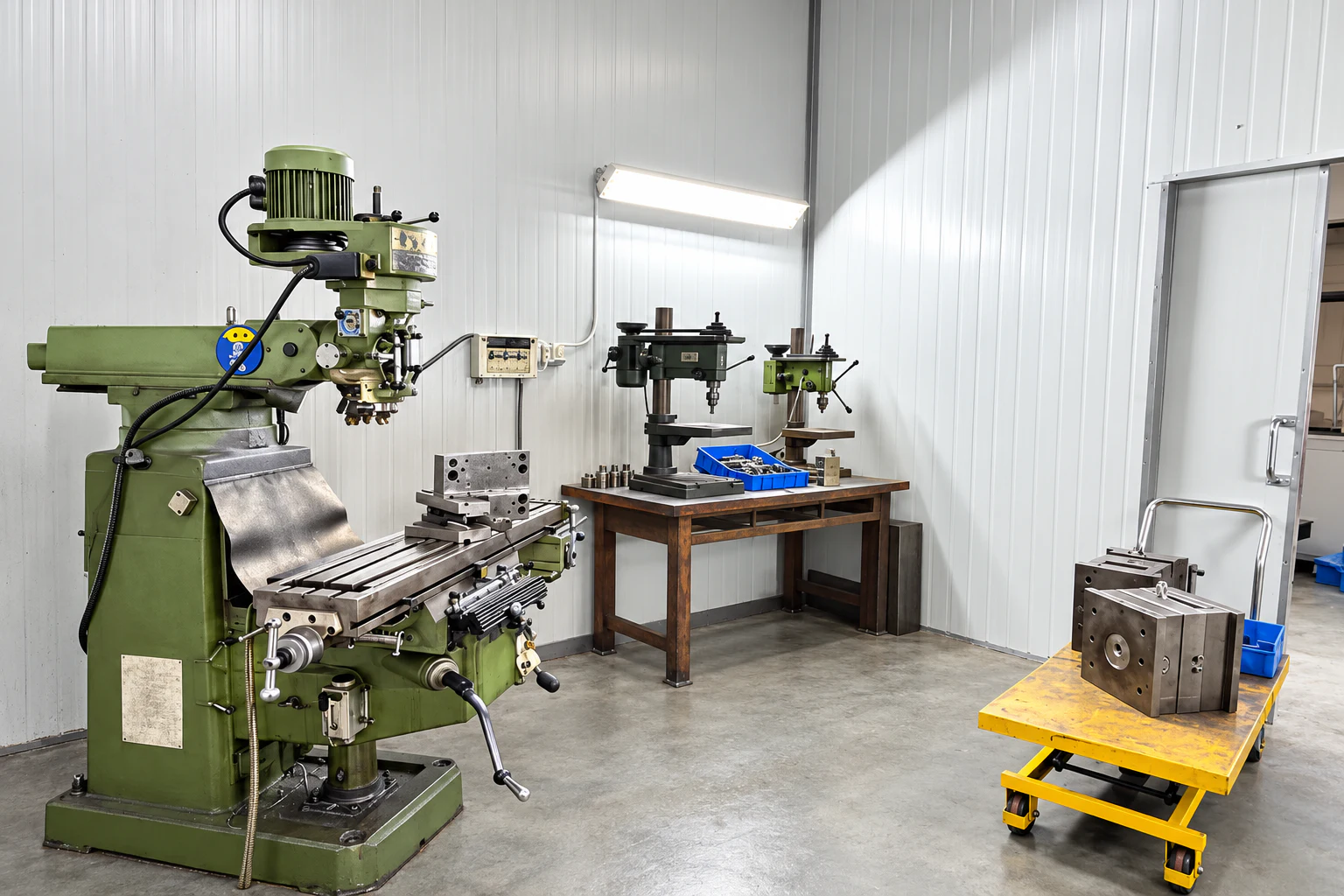
- Machining centres
- 4
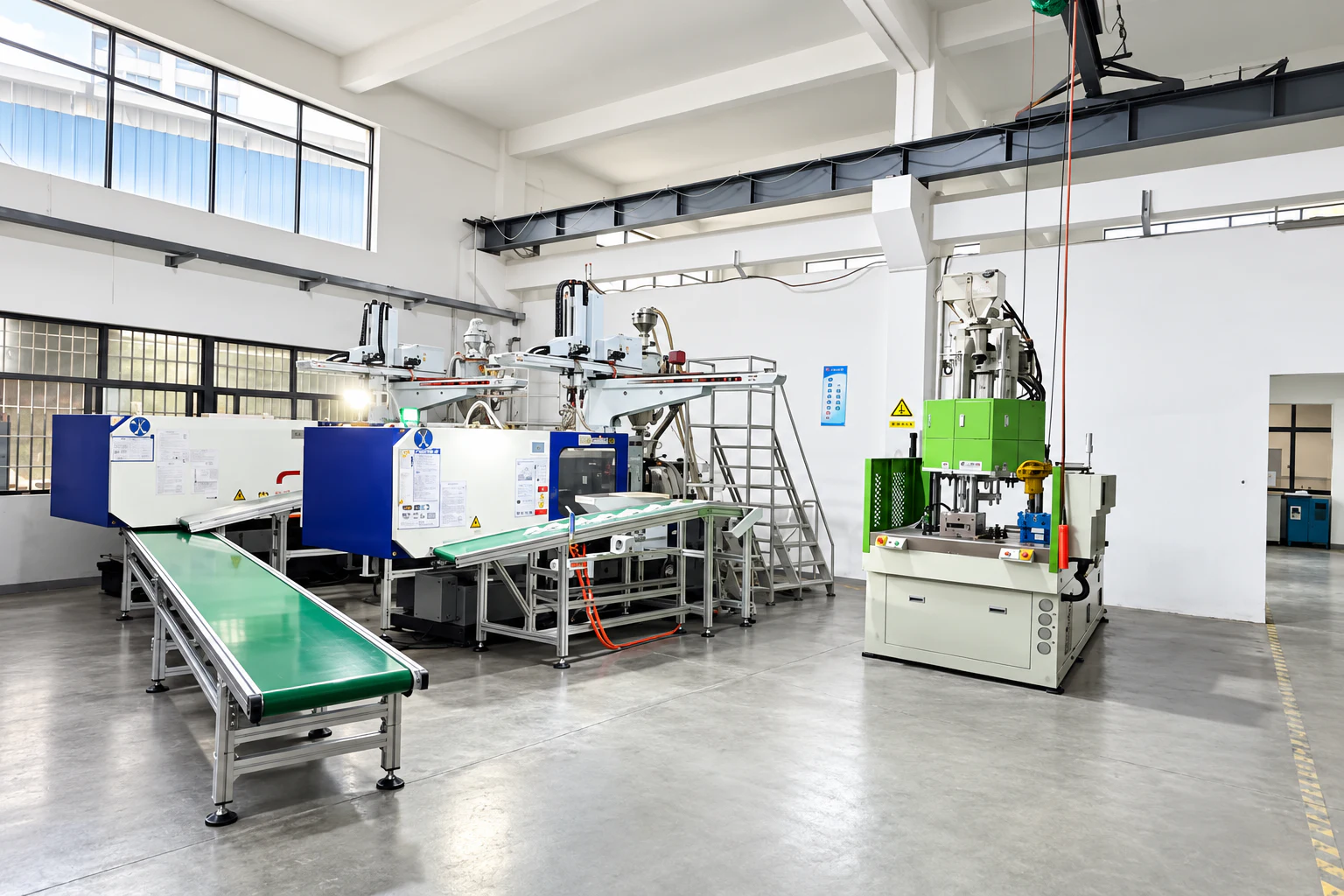
- Injection moulding machines
- 3
- Bench presses
- 9
- Tempering furnace
- 1
Inside the stamping workshop
Automatic stamping presses
Strip-fed presses in the stamping workshop.
Press-side production area
Component containers and handling space beside the presses.
Press operation
A production work area beside a stamping press.
Press equipment
Press equipment along the workshop wall.
Tooling and machining
Tooling workshop
Machines and tooling within the production workshop.
Machining equipment
Machining equipment used in component production.
Tool storage
Tools and fixtures stored alongside the work area.
Wire cutting
An operator working at the wire-cutting equipment.
Milling equipment
Milling equipment and workholding tools.
Machining workshop
Machining workshop
Machine tools arranged along the workshop aisle.
Grinding equipment
Grinding equipment in the machining workshop.
Injection moulding
Injection moulding
Injection moulding equipment and the adjacent work area.
Component storage
Component storage
Containers and packed materials in the storage area.
Storage layout
Marked floor space separates the storage area from the access aisle.
Materials and finishes
Copper
Type: Metal
Typical role: Current-carrying contacts and terminals
High electrical conductivity; soft, so used where spring force is not critical.
Brass
Type: Metal
Typical role: Terminals, sleeves and sheet parts
Copper-zinc alloy that stamps and machines readily with good conductivity.
Phosphor bronze
Type: Metal
Typical role: Spring contacts
Copper-tin alloy chosen where repeated flexing and conductivity are both needed.
Beryllium copper
Type: Metal
Typical role: High-strength spring contacts
Copper alloy that can be heat treated to a high spring strength.
Stainless steel
Type: Metal
Typical role: Springs and structural parts
Corrosion-resistant steel; lower conductivity than copper alloys.
Manganese steel
Type: Metal
Typical role: Spring and force parts
Material grade and heat treatment are selected to suit the part specification.
Tinplate
Type: Metal
Typical role: Shielding covers and housings
Tin-coated steel sheet, commonly used for formed covers and shields.
Aluminium
Type: Metal
Typical role: Lightweight conductive or support parts
Low weight with good conductivity; softer than copper alloys.
PVC
Type: Plastic, not a metal
Typical role: Electronic accessories such as insect-proof mesh
Non-conductive plastic used for accessory parts, never for metal contacts.
Sampling and order planning
- Sample lead time
- 10–15 days
- Estimate for samples; depends on the drawing and tooling needed.
- Routine production
- 10–15 days
- Estimate for routine orders; depends on part, material and quantity.
- Bulk orders
- 35–40 days
- Estimate for large quantities; depends on part and order size.
- Peak periods
- 1–3 months
- Estimate when the production schedule is full; confirmed when the order is placed.